The burger king nutrition menu is the tool Burger King provides for diners who want numbers before they order, and learning to read it well changes how you choose a meal. Calories, fat, sodium, carbs, protein, and allergen notes sit behind every sandwich, side, and drink, and this guide shows you how to use those figures without turning lunch into a maths test. It is not a diet plan, and it does not replace medical advice, but it does give you a clear way to compare two meals in under a minute.
One distinction matters right away. Our companion article on Burger King menu nutrition gives an overview of nutrition values across popular items, item by item. This article is different: it is a guide to the nutrition menu itself, meaning how the menu is organised, how to read each column, how to spot high sodium or high calorie traps, and how to customise an order toward a lighter result. Use the overview when you want the numbers for one item, and use this guide when you want to understand the whole system.
How the Nutrition Menu Is Organised
The burger king nutrition menu groups items the same way the ordering menu does: breakfast, burgers, chicken, sides, desserts, and drinks. Each row gives one item in its standard build, which means the toppings listed in the description are included and extras are not. A Whopper with Cheese row, for example, already counts the cheese, while a Whopper row does not, so comparing those two rows shows you exactly what cheese adds.
Serving sizes matter just as much as the numbers. A small fries row and a large fries row describe different amounts, and a meal row is not the same as a sandwich row. When you compare items, check that you are comparing the same size, or you may conclude that a small side is healthier than a large sandwich for the wrong reason. The official nutrition pages on bk.com give the most current figures, since recipes and suppliers can change.
Reading Calories, Fat, and Sodium
Calories tell you the energy in an item, and they are the easiest column to scan first. A classic Whopper style burger generally lands in the 600 to 700 calorie range, a double patty build can pass 900 calories, and a smaller Whopper Jr. style sandwich sits closer to 300 to 400 calories. Those ranges help you set a rough budget for a meal before you add fries and a drink, which can add 300 to 600 calories on their own.
Sodium deserves a second look, because it surprises more diners than calories do. Many sandwiches carry 1,000 to 1,500 mg of sodium, and a full meal with fries and a salty sauce can pass 2,000 mg quickly. Fat works the same way: a fried chicken sandwich, cheese, bacon, and creamy sauce each add fat, so a build with three of those toppings will always outrun a simpler build. Scanning sodium and fat after calories gives you a fuller picture than calories alone.
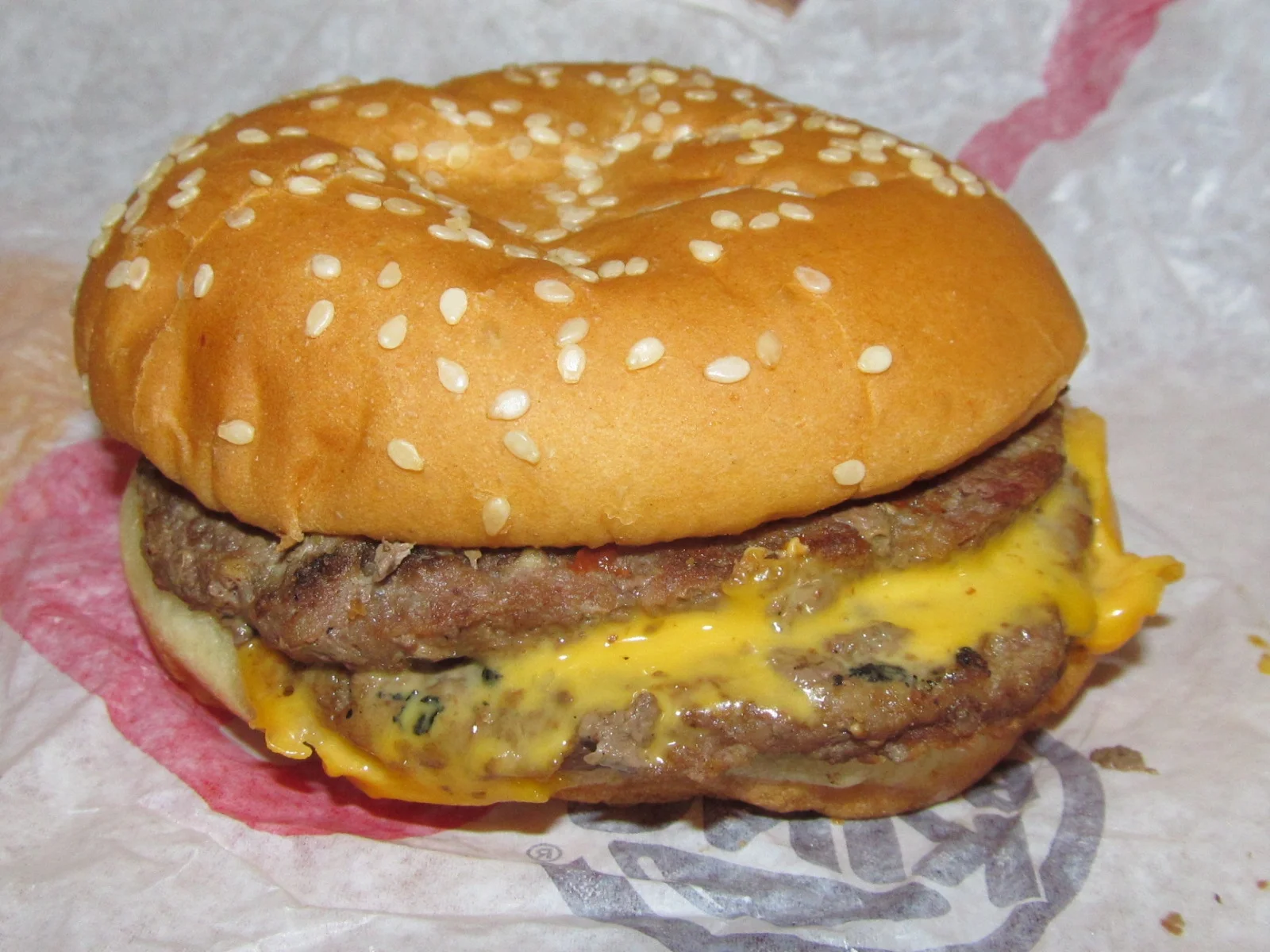
Photo: Willis Lam, CC BY-SA 2.0 – via Wikimedia Commons
Nutrition by Category
Breakfast items on the burger king nutrition menu vary widely. A simple egg and cheese sandwich may sit near 300 to 400 calories, while a loaded croissant with sausage, egg, cheese, and extra bacon can pass 600 calories. Hash browns add roughly 250 to 350 calories, and a large coffee with sugar and cream adds more than black coffee, which adds almost nothing. Breakfast is where a small swap, such as skipping one meat topping, saves the most calories for the least loss of flavour.
Chicken items split into two groups. Grilled style chicken, where offered, usually lands lower than fried chicken, often by 150 to 250 calories for a similar sandwich, because frying adds oil that grilling does not. Fried chicken sandwiches with bacon, cheese, and creamy sauce sit at the higher end, while a plain crispy chicken sandwich without extra toppings sits in the middle. Fish follows a similar pattern: a plain fish sandwich stays moderate, while extra tartar sauce and cheese push it higher.
Sides, Desserts, and Drinks: Where Meals Grow
Sides decide many meals on the burger king nutrition menu. Small fries generally run 300 to 400 calories, onion rings can run higher because of the batter, and mozzarella sticks add both calories and sodium quickly. A side salad, where available, is the lightest side choice by a wide margin, often under 100 calories before dressing, so dressing choice matters: a creamy dressing can double a salad’s calories, while a light vinaigrette keeps it low.
Desserts and drinks deserve the same attention. A shake can carry 500 to 700 calories, which is close to a full sandwich, while a soft serve cone sits much lower. A large sugary soft drink adds roughly 250 to 350 calories, while water, unsweetened iced tea, and black coffee add almost none. Swapping one large sugary drink for water is often the single biggest calorie saving in a whole meal, and it costs nothing in flavour from the sandwich itself.
| Category on the nutrition menu | Typical calorie range | Main sodium watch point |
|---|---|---|
| Small burgers and Jr. sandwiches | 300 to 450 calories | Cheese and sauces |
| Classic Whopper style burgers | 600 to 750 calories | Patty, cheese, and condiments |
| Double patty burgers | 850 to 1,000 calories | Two patties plus cheese |
| Fried chicken sandwiches | 650 to 850 calories | Breading, bacon, and sauce |
| Breakfast sandwiches | 300 to 650 calories | Sausage and cheese |
| Fries, small to large | 300 to 550 calories | Salt and portion size |
| Shakes and sundaes | 300 to 700 calories | Less sodium, high sugar |
Ranges are typical figures for standard builds, not exact values for one restaurant. Always check the official nutrition menu for the exact item and size you plan to order, since recipes change.

Photo: Jason Zhang, CC BY-SA 3.0 – via Wikimedia Commons
Customising Toward a Lighter Meal
Customising on the burger king nutrition menu works best with small, specific swaps. Removing cheese saves roughly 100 calories, skipping bacon saves a similar amount plus a good chunk of sodium, and swapping a creamy sauce for mustard or a lighter sauce saves fat without removing flavour entirely. Ordering a Jr. size instead of a full size sandwich saves more than any topping swap, so size should be your first lever, not your last.
Pairing matters too. A classic burger with a small fries and water lands far lighter than the same burger with large fries and a large sugary drink, even though the sandwich never changed. Splitting a large fries between two diners, sharing a dessert, and choosing a side salad once a week all keep the meal enjoyable while pulling the totals down. The goal is a meal you still enjoy, not a meal you resent, because a plan you hate never lasts past one visit.

Photo: Renee Comet (Photographer), Public domain – via Wikimedia Commons
Allergens and Special Diets
The burger king nutrition menu sits beside a separate allergen guide, and the two work together. Nutrition figures tell you calories and nutrients, while the allergen guide tells you which items contain milk, egg, wheat, soy, fish, peanut, tree nut, or sesame ingredients. If you manage an allergy, read both, and tell staff about the allergy when you order, because shared cooking equipment can matter even when an ingredient list looks safe. Our allergen menu guide explains that guide in full.
For special diets, the nutrition menu helps you spot useful patterns. Lower carb diners can look for salads and bunless style custom orders, though Burger King does not publish a separate low carb menu. Vegetarian diners can compare plant based builds against cheese heavy sides, since a meat free meal can still run high in calories. Prices vary by location, and custom orders may cost a little more or less depending on the toppings removed or added, so check the total before you pay.

Photo: Sikander Iqbal, CC BY-SA 4.0 – via Wikimedia Commons
Using the Nutrition Menu Before You Order
A quick routine makes the burger king nutrition menu genuinely useful. First, pick your sandwich and note its calories. Second, pick your side and drink and add those figures, so you see the meal total rather than one item in isolation. Third, look for one swap that saves 150 calories or more without changing the meal you wanted, such as a smaller fries or water instead of a sugary drink. That three step check takes under a minute in the app or on the website.
For price context alongside nutrition, see our menu with prices guide and our menu calories guide, which pairs calorie figures with everyday items. Together with the overview article linked at the start, those guides let you plan a meal by taste, price, and nutrition at the same time, instead of guessing at the counter.
Frequently Asked Questions
Where can I find the Burger King nutrition menu?
The official nutrition menu sits on bk.com and in the Burger King app, organised by category with calories, fat, sodium, carbs, and protein for each standard item. Figures can change when recipes change, so check the official pages for the most current values.
How many calories are in a Whopper?
A classic Whopper style burger generally lands in the 600 to 700 calorie range, while a Whopper Jr. style sandwich sits closer to 300 to 400 calories. Cheese, bacon, extra sauce, and a larger size each push the total higher.
What is the lowest calorie Burger King meal?
A lighter meal usually combines a smaller sandwich, a side salad or small fries, and water or unsweetened tea. That combination can land near 500 to 700 calories in total, compared with 1,200 calories or more for a large burger meal with large fries and a sugary drink.
Does the nutrition menu cover allergens too?
Nutrition figures and allergen information sit in related but separate guides. Use the nutrition menu for calories and nutrients, and the allergen guide for ingredient allergens, and tell staff about any allergy when you order.
How is this guide different from the menu nutrition overview?
The overview article lists nutrition values item by item, while this guide explains how to read and use the nutrition menu itself, including category ranges, customising swaps, and a quick pre order routine. Use both together: the overview for one item’s numbers, and this guide for the system behind them.